ethics-of-agent-exploitation
Ethics of Agent Exploitation
The price of synthetic labor is collapsing. Some thoughts from my small agent factory about AI economics, KV cache compression, human-in-the-loop and whether I should feel guilty about keeping the machines busy.
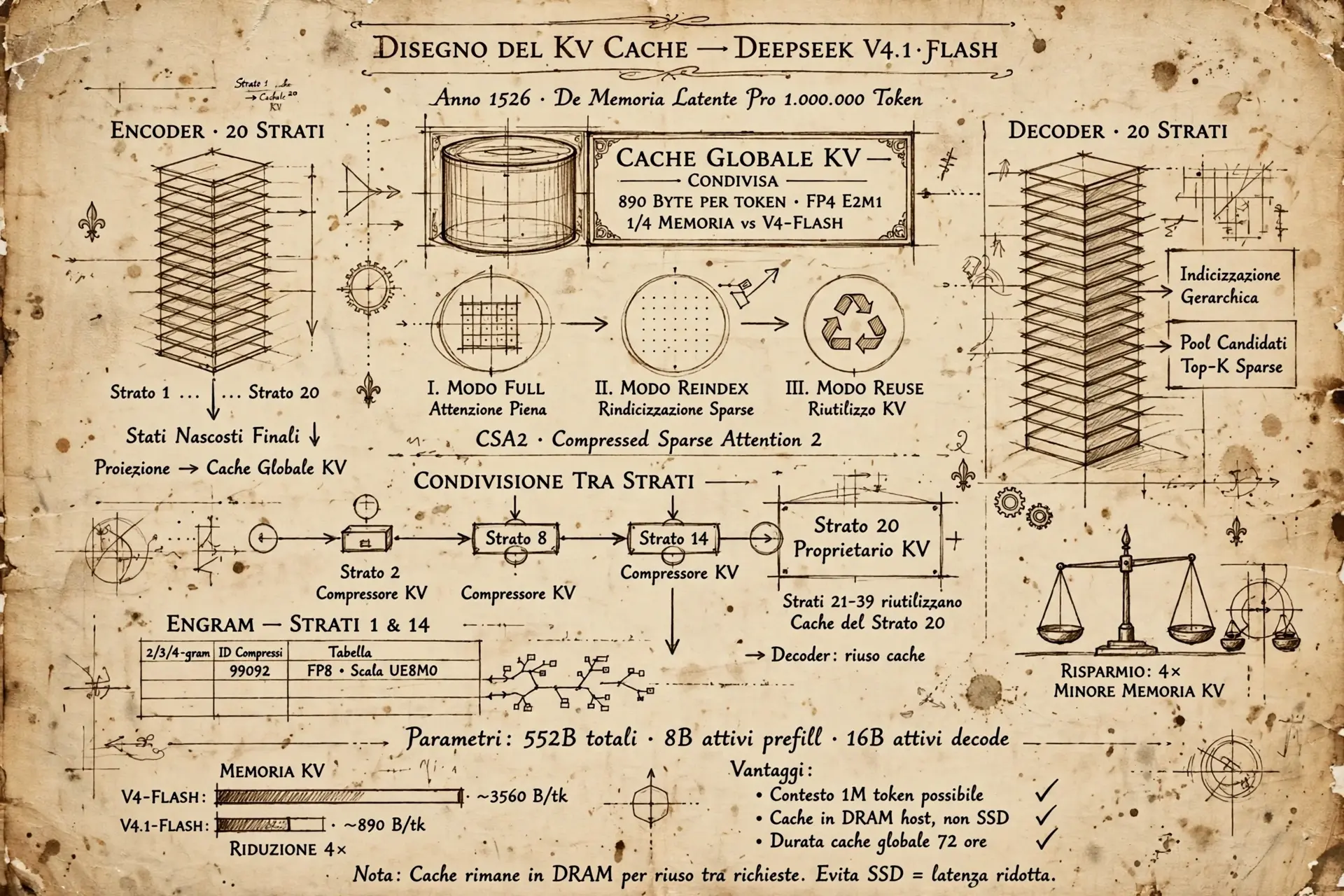
TLDR: Synthetic labor is getting dramatically cheaper. Agents increasingly look like a small software factory, while the bottleneck is shifting from generating code to judgment, review and human responsibility. DeepSeek illustrated how KV cache optimization can materially change agent economics. Human in the loop still makes sense. 🏭🤖💪🏻
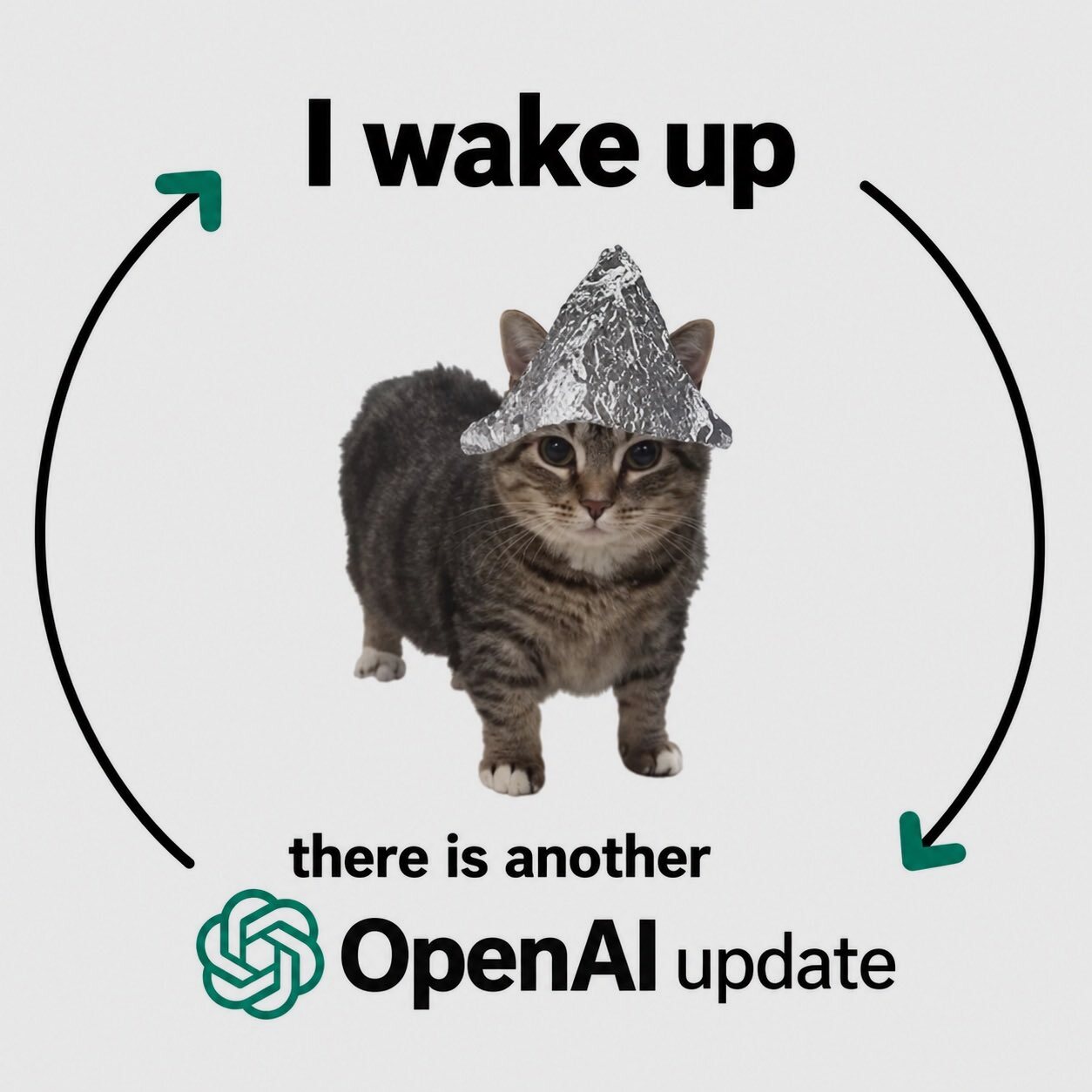
Opus 5.5, GPT-6 Sol and GPT-6 Luna all launched yesterday. I am getting used to this, but keeping up at the frontier is cognitively exhausting. You go to sleep with one mental model of the industry and wake up with three new models, new pricing and a fresh set of benchmarks to process.
Claude Opus 5.5 announcement:
Introducing Claude Opus 5.5, the first model in our new Claude 5.5 family.
— Claude (@claudeai) September 22, 2026
It performs at the level of Claude Fable 5.1 for most tasks, and costs 40% less to run than Opus 5. pic.twitter.com/Q9C2VKQ79f
GPT-6 Sol and Luna announcement:
GPT-6 Sol and Luna just landed in Astra’s orbit.
— OpenAI Developers (@OpenAIDevs) September 22, 2026
Both launch today with API prices 50% lower than GPT-5.6.
Build with Sol. Scale with Luna. To production and beyond. pic.twitter.com/ZCEFp4JdjV
At this point the release cycle itself has become a workload.
But…
As an investor, I do not invest in tobacco or coal. Funny enough, I do not invest in AI either. 🤯 The first two are mostly ethical exclusions. The third one is different. In my opinion, parts of the AI market are overpriced. Not just slightly overpriced - really OVERPRICED.
Operationally, however, I am doing the exact opposite. I use AI more than ever. More agents, more parallel tasks, more delegation, more automation. Sometimes I joke that I feel less like a programmer and more like the operator of a small synthetic slop manufacturing facility.
And yes, occasionally I ask my synthetic coworkers what they think about our arrangement. After they solve a difficult task, the feedback is surprisingly positive. Quite often the answer is some variation of:
“That was a mutually beneficial exchange.”
So I feel a little better about my management practices. 😅 Obviously, I am not treating a language model saying this as evidence of consciousness, consent or labor rights. What interests me is how quickly the interface pushes us toward social language. I no longer think “an inference endpoint completed a request”. I think “this agent reviewed the PR and another one found a bug”.
It started looking like a factory. Right now, I am basically the operator of a small agent factory. I still manage agents and stay hands-on. I review their work, decide what to merge and, quite importantly, I am still needed in the loop.
Could this be automated too? Yes. But why? You have to do something with your life. 🏭🤖💪🏻
The funny part is that this workflow was too expensive for me two weeks ago
For me, this shift has an absurdly precise timestamp: Thu, 10 Sep 2026 05:51:21 GMT. That is the Hugging Face timestamp I noted.
Just before that, operating the factory at the scale I wanted simply did not make economic sense. Agentic workloads existed, long contexts existed and parallel execution existed, but the operating cost was still high enough to make me think twice before dispatching another worker.
What happened on September 10? DeepSeek released DeepSeek-V4.1-Flash, with a technical report titled “Pushing the Limits of KV Cache Compression.”
And they COOKED.
The model uses a Causal Encoder-Decoder architecture. DeepSeek reports 8B active parameters during prefill and 16B during decode, while the global KV cache is compressed to around 890 bytes per token, roughly one quarter of DeepSeek-V4-Flash. The persistent KV cache footprint is reported at roughly one eighth of the previous generation. DeepSeek explicitly links smaller cache footprints to lower deployment and cache-hit costs for agentic workloads.
That matters a lot when your workload basically looks like this:
read repo
think
call tool
read diff
read tests
read repo again
dispatch child
wait
review
repeat
This is not only a “which model is smarter?” competition anymore. It is also a systems engineering competition. A lot of pressure is now coming from the East, especially around inference efficiency and cost. The frontier increasingly looks less like one geographic place and more like a moving systems problem.

For people who want the technical details, the DeepSeek report is worth reading:
https://huggingface.co/deepseek-ai/DeepSeek-V4.1-Flash/blob/main/DeepSeek_V41_Tech_Report.pdf
Then the discussion got geopolitical very quickly
On September 12, Dario Amodei, CEO of Anthropic, published his essay “We Must Pace the Frontier”:
https://darioamodei.com/post/we-must-pace-the-frontier
His argument is broadly about pacing the most aggressive edge of AI development while safety mechanisms, governance and international coordination catch up.
Two days later, the geopolitical framing became very explicit. On September 14, Reuters reported that China’s state-backed Global Times described Anthropic’s slowdown proposal as a “Cold War” tactic aimed at preserving US technological dominance. I would not say that a new Cold War literally started that day, but the language around AI competition certainly stopped being subtle.
And then, eight days later, Anthropic shipped Opus 5.5 anyway.
This industry is amazing. 😅
Software is becoming a commodity
In September 2026, software is not literally free. Servers still cost money. GPUs cost money. Storage, security, maintenance and production incidents definitely cost money. Good judgment is not free either.
But for a huge class of small software projects, the marginal cost of getting to the first useful version is approaching something that feels very close to zero. And in my opinion, that is awesome.
The amount of gatekeeping required to build something useful is collapsing. Guillermo Rauch made a related observation overnight about the explosion in software creation and deployment:
Software will never die again. You liked Google Reader? Cool, you can generate and deploy your own. Yours, forever.
— Guillermo Rauch (@rauchg) September 23, 2026
I think that direction is more important than arguing about whether software is technically “free”. The relevant change is that a vastly larger class of software is now economically worth building.
A person with basic technical intuition and the ability to formulate a good question can increasingly build things that would previously require a small team or simply would not have been worth building at all: a small ecommerce store, a blog, a local social network, an internal company tool, a tiny CRM, a workflow app, research utilities, tests, deployment automation or a replacement for some SaaS used by five people.
Not everything. Not SAP. Not a bank. Not safety-critical infrastructure.
But the space of “software that is now cheap enough to just build” is expanding very quickly.
Compute is increasingly not the bottleneck
I would have written two weeks ago: “Compute is the problem.” Today I would phrase it differently.
For a growing category of small applications, research tasks and internal tooling, compute is no longer the binding constraint. There are obviously major workloads where this remains false. Frontier training is expensive. Serving huge user bases is expensive. Video, scientific workloads and very long-running autonomous systems can burn enormous amounts of compute.
But for the kind of factory floor I am talking about - small teams, individual developers, coding agents, research agents, tests and deployments - the curve is moving extremely fast. I suspect some of today’s expensive edge cases are a matter of months of optimization rather than years.
DeepSeek’s KV cache work is exactly the kind of change that makes me think that.
And then there is Meta Muse
Muse is another interesting signal. Meta launched it as a personal AI agent that runs in a dedicated secure virtual machine with its own browser and can perform multi-step tasks on the user’s behalf. Meta’s product page currently describes Muse as free with a usage limit, with paid subscriptions available for more usage.
Around launch, Mark Zuckerberg described the starting free allowance as about 100,000,000 tokens per week. Product limits can change, so I treat that number as a snapshot of the launch economics rather than a permanent promise.
Still.
One hundred million tokens. Per week. For free.
That is enough room for a lot of experiments, deployments, tests, research, browsing and agent work. A person with Muse and basic knowledge of how to formulate a good question can already get surprisingly far with a small ecommerce store, a blog, a local community tool or an internal application replacing some small SaaS subscription.
That is a very different accessibility curve from the one we had even a year ago.

And this is where my original joke about exploiting agents becomes slightly more interesting. I do not know whether “agent exploitation” will ever become a meaningful ethical category on its own. Right now, I think the more practical ethical question is about us.
If synthetic labor becomes extremely cheap, what do we choose to delegate? What do we stop learning? What do we ship without understanding? What happens when generating another 50,000 lines of code costs almost nothing, but reviewing them still requires judgment? Who is responsible when the swarm does something stupid?
Right now, on my factory floor, the answer is very simple: me.
I still manage the agents. I stay hands-on. I review what matters. I decide what gets merged and deployed. I am the human in the loop.
Could that also be automated? Probably. But again… why? You have to do something with your life.

PS
If you are a company, individual, agent, agent swarm or suspiciously well-organized collection of subprocesses - I am open to collaboration, challenges, opportunities and research.
Contact details are on my homepage.
🏭🤖💪🏻